
The Saragossa Manuscript (1965)
Studies in Framing
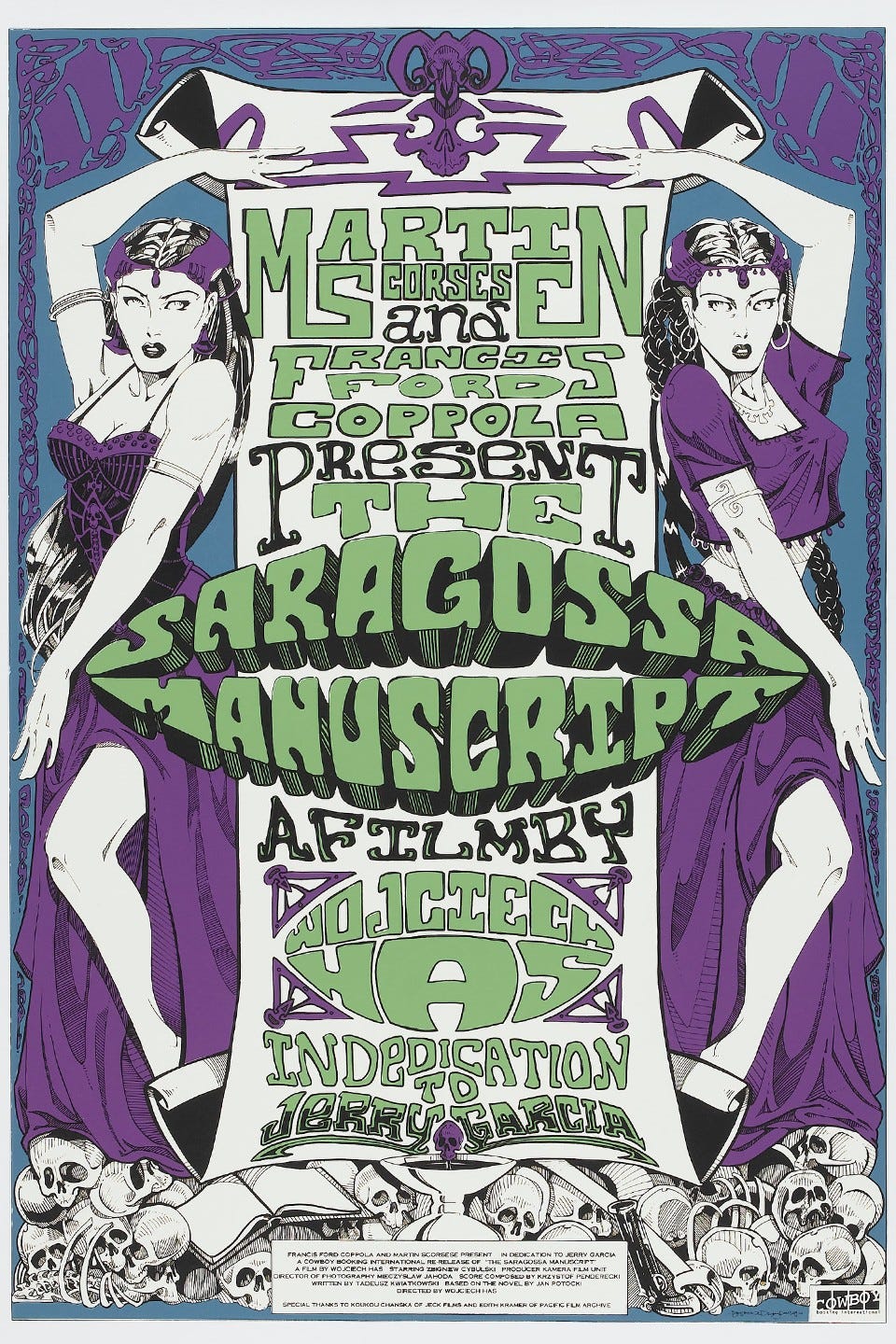
The Saragossa Manuscript (1965) is the quintessential frame narrative in film. Admired by Luis Buñuel, David Lynch, Francis Ford Coppola, and Martin Scorsese, it has been described by critic Michał Oleszczyk as “a Chinese-box narrative structure that still dazzles with its intricate, convoluted beauty”.
I first watched it many years ago, in my twenties, after reading it was a unique example of metafiction in film: a story within a story within a story. Of course, I also knew about the influence on 1960s counterculture, and how Jerry Garcia died while trying to restore the film with complete subtitles, when Scorsese and Coppola finally came in to help restore it.
Now, what I find particularly striking is its aesthetic, able to incorporate elements of Baroque art styles, Romanticism, symbolism, surrealism, and Orientalism (this is explored in a book: Iwona Grodź, Between Dream and Reality: The Saragossa Manuscript). I never found the opportunity to read Jan Potocki’s novel, but the plurality of styles likely comes with the source.
This post will be the first of a series of brief analytical readings, focused on the framing, composition, and use of shallow focus to achieve specific aesthetic effects through different stylistic choices.
Shot composition involves the elements of a scene arranged in the camera frame, and the composition of each shot can include the arrangement of visual elements to convey an intended view or imagery.
Frame composition can then evolve into something as vivid as poetry. The first example of this approach to frame composition as Romantic, Symbolist poetic imagery comes at 13:01 in the film, right before Alfonso van Worden famously meets the Moorish princesses.
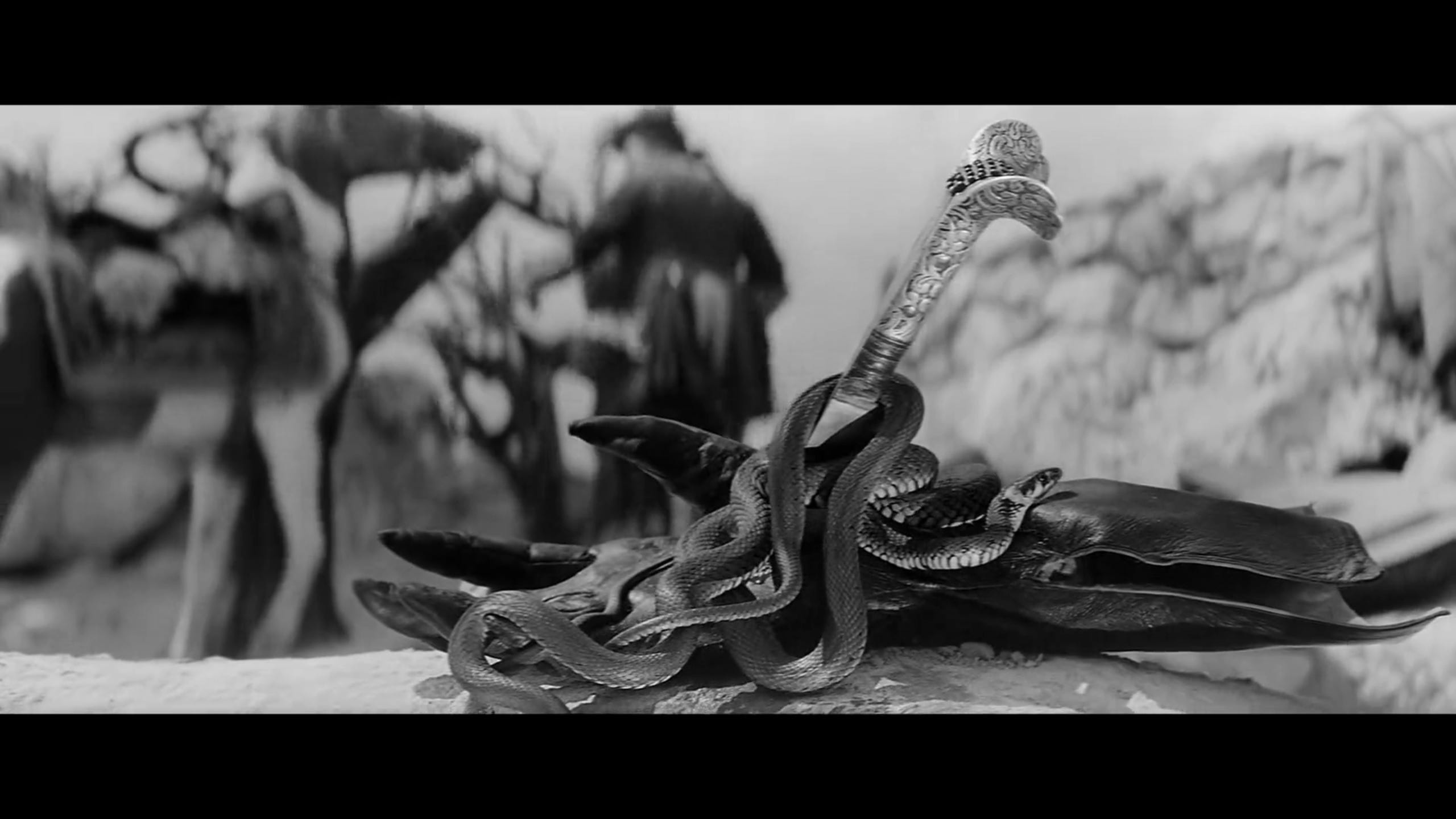
The cinematographer Mieczysław Jahoda works wonders with the black and white photography, and the use of shallow focus framing is recurring, as others have noted before.
In one of his most effective techniques, Has frames the scene using a tight close-up of snakes writhing next to a pile of skulls. This framing device is used to great effect throughout the movie.1
Special mention must be made of Mieczyslaw Jahoda‘s impressive b/w photography. The film is a visual feast from start to finish. The widescreen compositions are stunning and the atmospheric photography is even more so. Hard, gritty, and yet appropriately dreamy, Jahoda’s work vividly brings the film’s abundance of surreal gothic imagery to life. At its best, it’s a veritable symphony of light and shadow (at its worst, it’s just murky). As befits the film’s subject matter, the visuals create a universe of their own, as demanding, exhausting, yet ultimately rewarding as the film itself.2
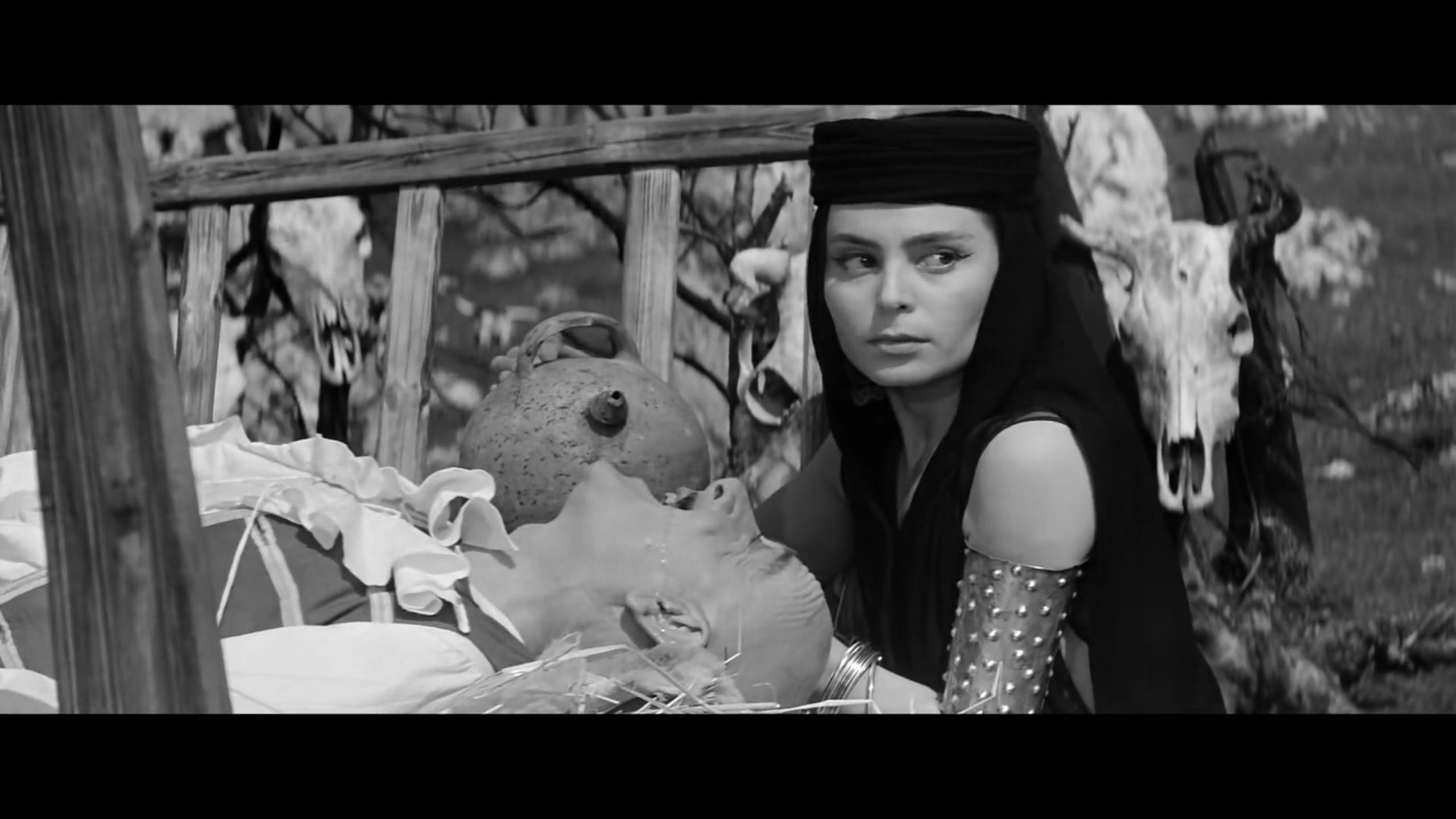
Later, Alfonso van Worden’s father is recovering from a duel and drinking water from a jug offered by a mysterious woman. Then, there is a cut to a close-up of their hands joined in marriage, again in shallow focus.
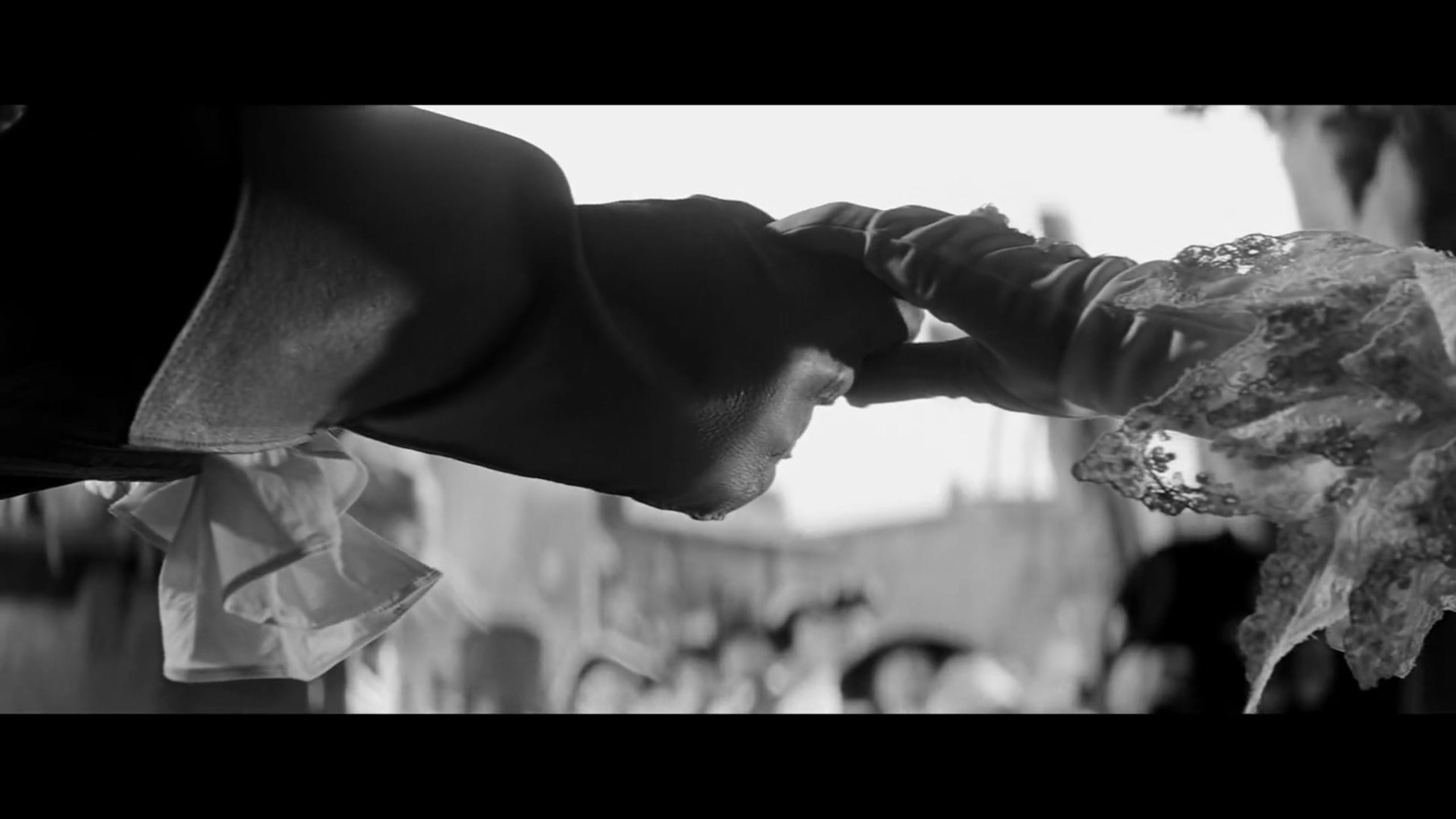
To be fair, marriage must feel like being coiled by a snake and pierced by a dagger, but I am not sure if these shots have any direct relation in the film. It does not seem like they were intended to be connected in that sense. The shot composition is a study in framing, allowing an openness of meaning.
Fidler, John. The Saragossa Manuscript. Senses of Cinema Issue 49, Feb. 2009.
The Bedlam Files: The Saragossa Manuscript.